Preschool years are a time of rapid growth in learning, social skills, independence, and emotional development. This page offers trusted resources to support families and caregivers of children ages 3–5.
Use the table of contents below to quickly jump to what you need.
Table of Contents
- Town Preschool Registration Links
- Reading to Your Preschooler
- Playgroups & Storytimes
- Development & Milestones
- Safety
- Parenting Tips
Town Preschool Registration Links
Check out Our Programs page for more information on our Early Start programs. You can also find more private options on page 20 of our Resource Guide.
Reading to Your Preschooler
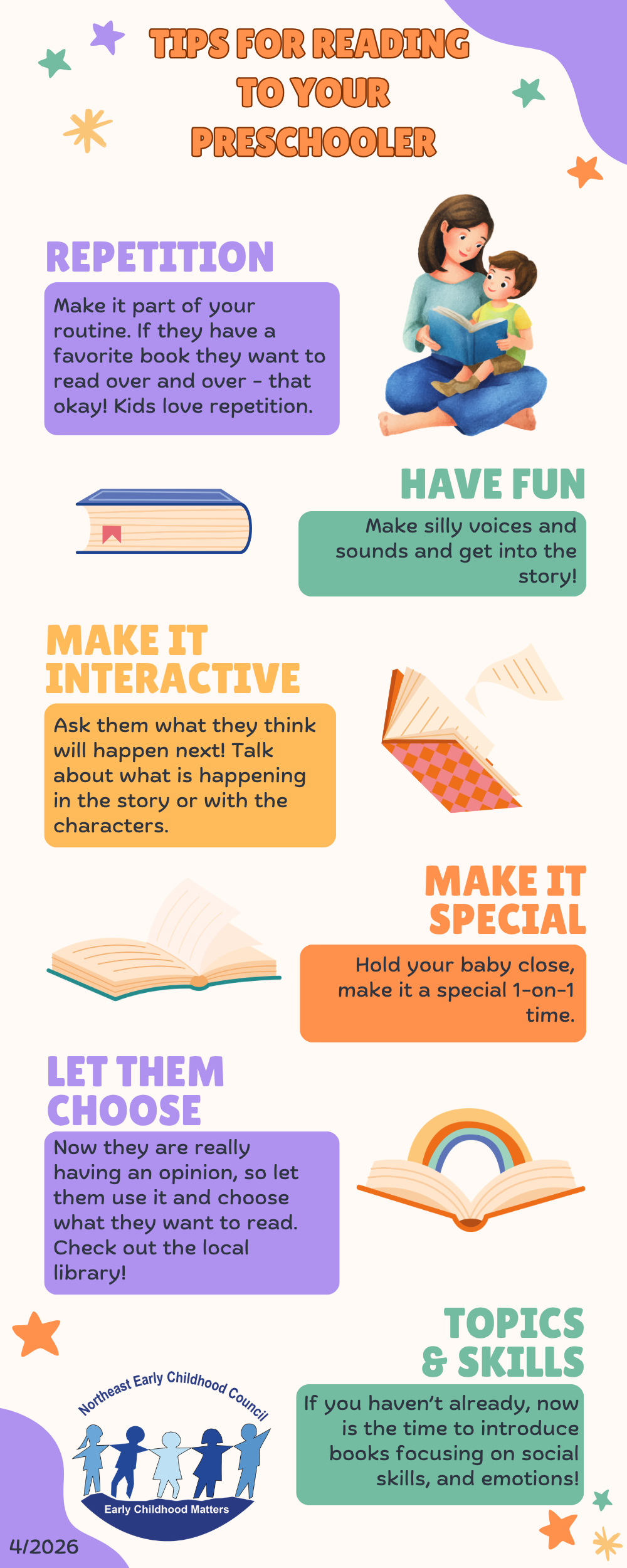
Reading with your 3–5 year old is one of the most effective ways to support their growing language, imagination, and early literacy skills. At this age, children are rapidly developing vocabulary, understanding how stories work, and beginning to recognize letters, sounds, and patterns in print. Sharing books together helps build these skills in a natural, meaningful way.
Talking about the pictures, asking simple questions, and letting your child participate in the story all help strengthen comprehension and communication. Even short, daily reading routines can make a big difference over time.
Reading together also supports important social-emotional development. Stories give children a chance to explore feelings, learn about relationships, and make sense of the world around them. Just as importantly, this shared time helps build a strong, positive connection between you and your child, creating a lifelong love of books and learning.
Types of books ideal for this age:
- Rhyming & repetitive stories
- Alphabet, Counting, & Concept Books
- Books about Emotions & Feelings, & Social Skills
- Silly & Fun Books
- Special Interest Books – books about topics your child already loves!
- Real Life Books
- Interactive books
Read to Grow offers free books to families, programs, and they have a Bookmobile! To request free books, complete the form here: Family Book Request Form
Playgroups & Storytimes
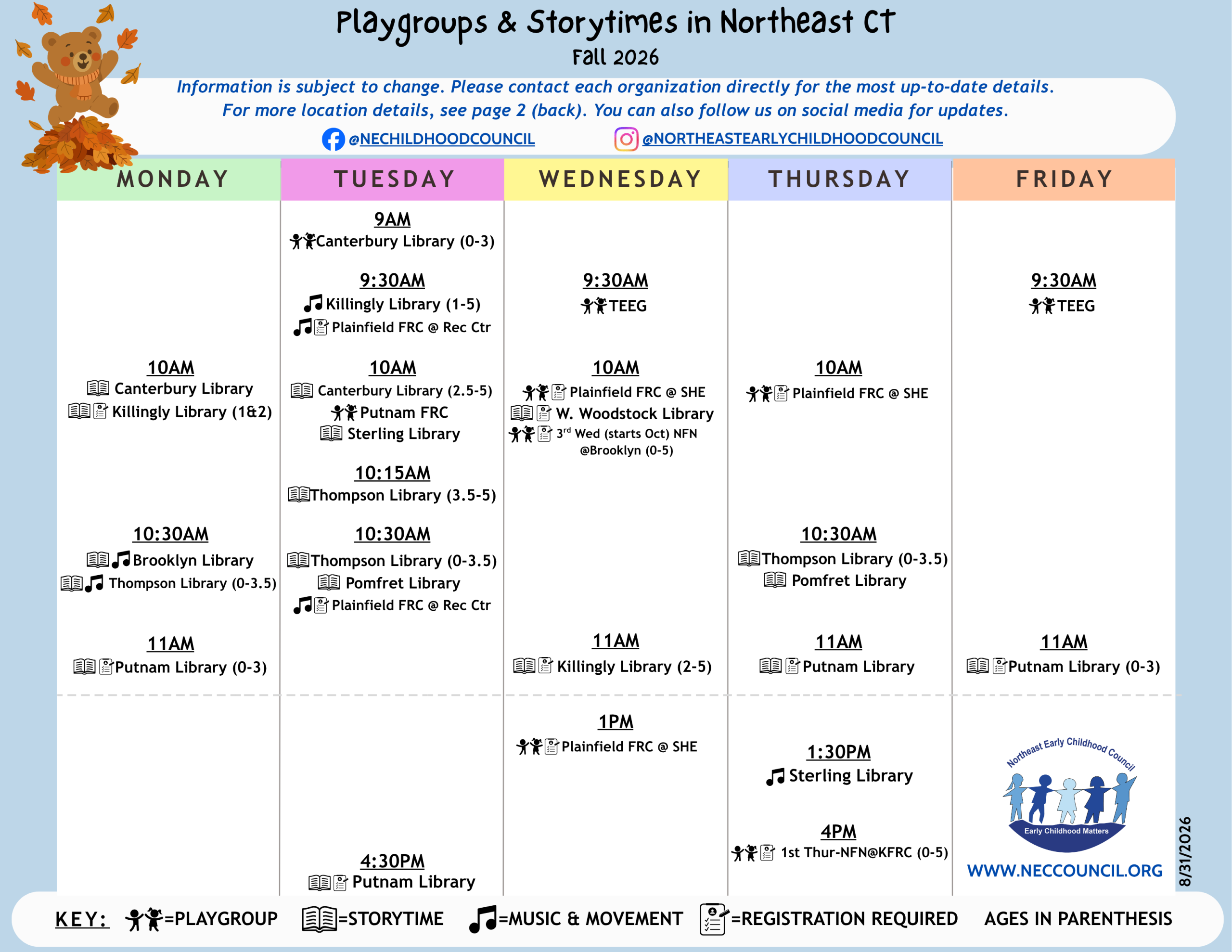
Many of our local Family Resources Centers, libraries, and other organizations offer FREE playgroups for ages 0-3.
Playgroup information is always changing; we encourage families to follow NECC on social media to be updated on regional playgroup information. We update our flyer seasonally and share on our social media.
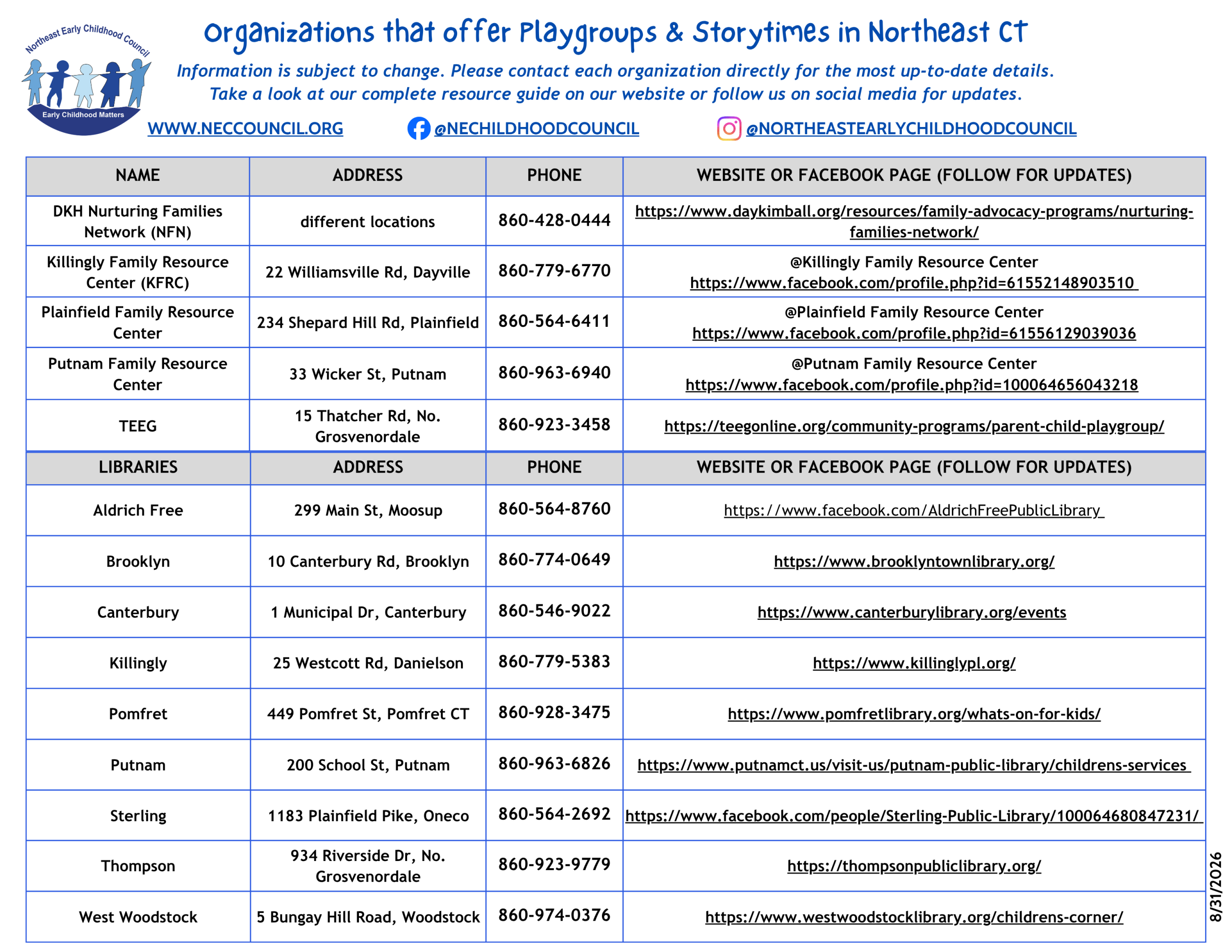
In addition, you can locate contact information for organizations that host playgroups/classes for families in pages 26-28 in our resource guide. We encourage you to reach out to those organizations to find out their latest calendar of events or get on their email list for newsletters.
Development & Milestones
Mid-Level Developmental Assessment (MLDA) provides a high quality, easily accessible developmental assessment of children 3 to 6 years who are struggling within their home and/or school environment.
CDC’s Developmental Milestones by Age
211 Child Development supports children’s healthy growth and development starting from pregnancy.Call 1-800-505-7000 to reach a Care Coordinator.
CT ELDS Strategies for Learning at Home The CT Early Learning and Development Standards (CT ELDS) were developed to help families, communities, and schools work together to support children’s early learning and growth. Their site includes useful printouts for every age, filled with simple strategies to help families support learning at home across all areas of development.
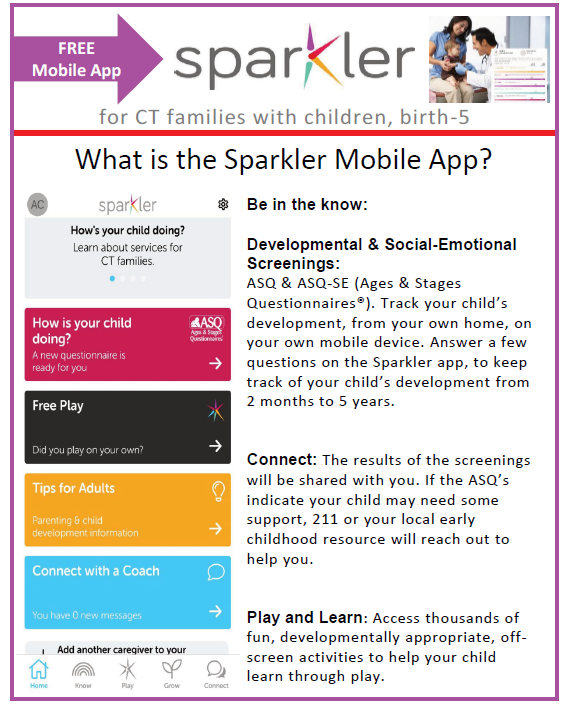
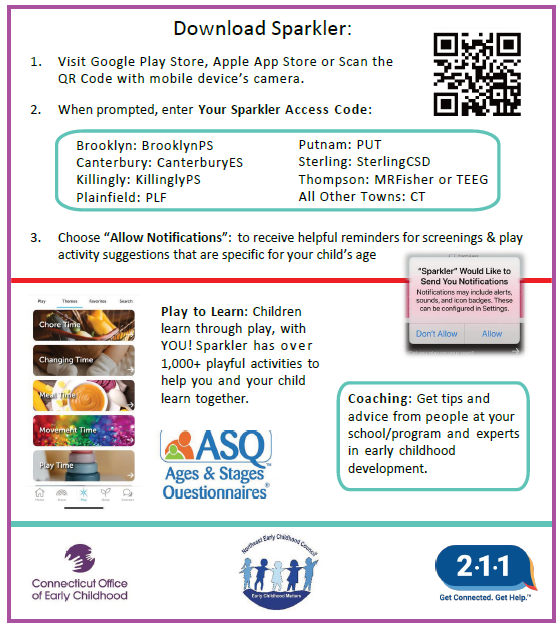
Sparkler’s mobile app provides fun play activities and helps families learn how their children are developing — through observation of age-based play activities and through the leading child development screening questionnaire.
Autism, ADHD and Other Learning Concerns
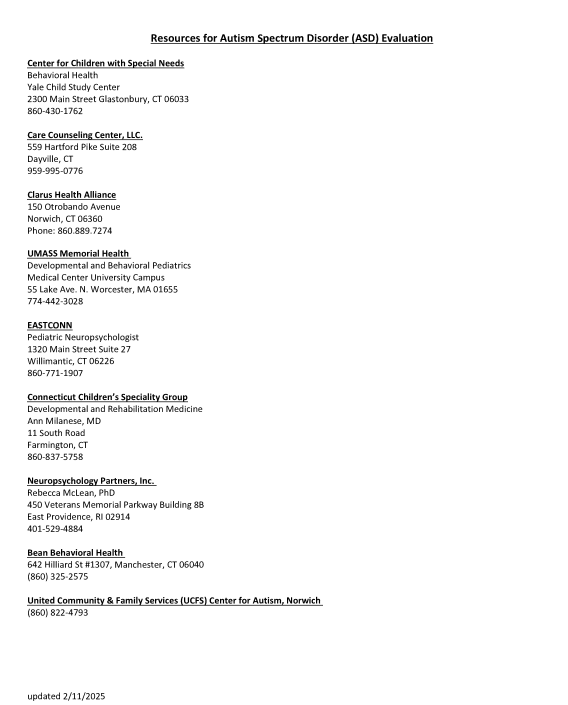
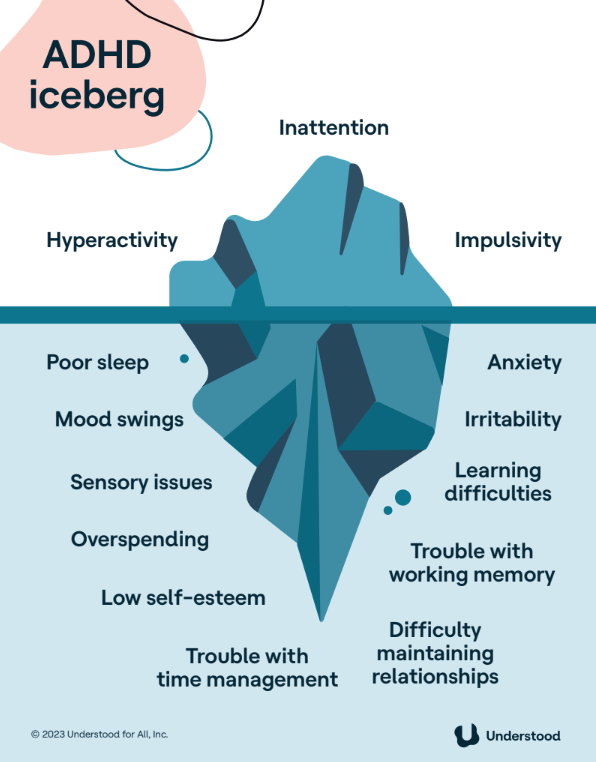
Young children develop at their own pace, but early signs of differences in communication, attention, learning, or social interaction can sometimes indicate concerns such as Autism Spectrum Disorder (ASD), ADHD, or dyslexia. The following resources are designed to help preschool educators and families better understand developmental differences, recognize early signs, and support children through early intervention and inclusive practices.
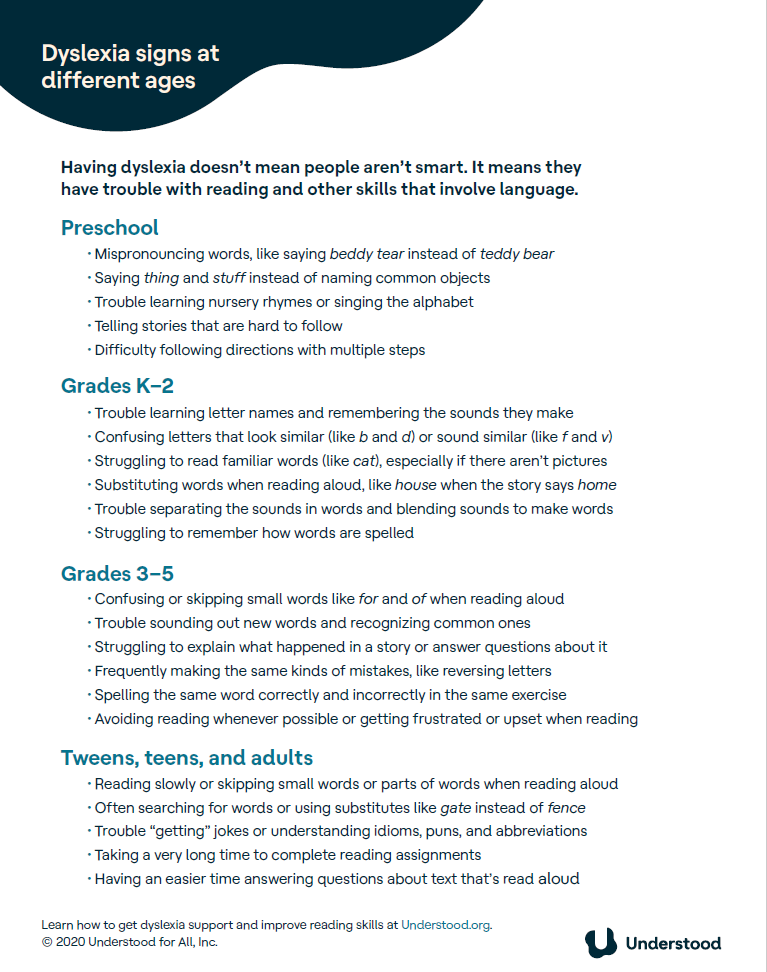
Recognizing Early Signs of Dyslexia in Preschoolers
You can find more resources and information on our School Age page.
Social-Emotional Development
Social-emotional learning (SEL) helps preschoolers understand their feelings, build relationships, and interact positively with others. It includes skills like recognizing emotions, expressing needs, taking turns, and showing empathy.
These skills are just as important as early academics. When children feel safe and confident, they are better able to learn, manage big feelings, and form positive connections. Strong social-emotional development also prepares children for kindergarten by helping them navigate classroom routines, work with peers, and approach learning with confidence.
What can you do to help this development? Here are just a few tips:
- Modeling Empathy & Compassion– Show caring behavior in everyday interactions; children learn a lot by watching adults.
- Labeling Feelings – Help children label emotions like happy, sad, or frustrated, and discuss what causes them.
- Use Books – Read books about emotions and other social skills like kindness & sharing. For a comprehensive list of books for many ages, click here.
- Encourage problem-solving – Guide children to find solutions when conflicts arise instead of immediately stepping in.
- Practice social skills – Use games and group activities to reinforce patience and cooperation. If your child is not in preschool or daycare, try one of the many free local playgroups.
- SEL Kits – Check out our Social-Emotional Learning Kits page and see if you’re eligible for a free kit!
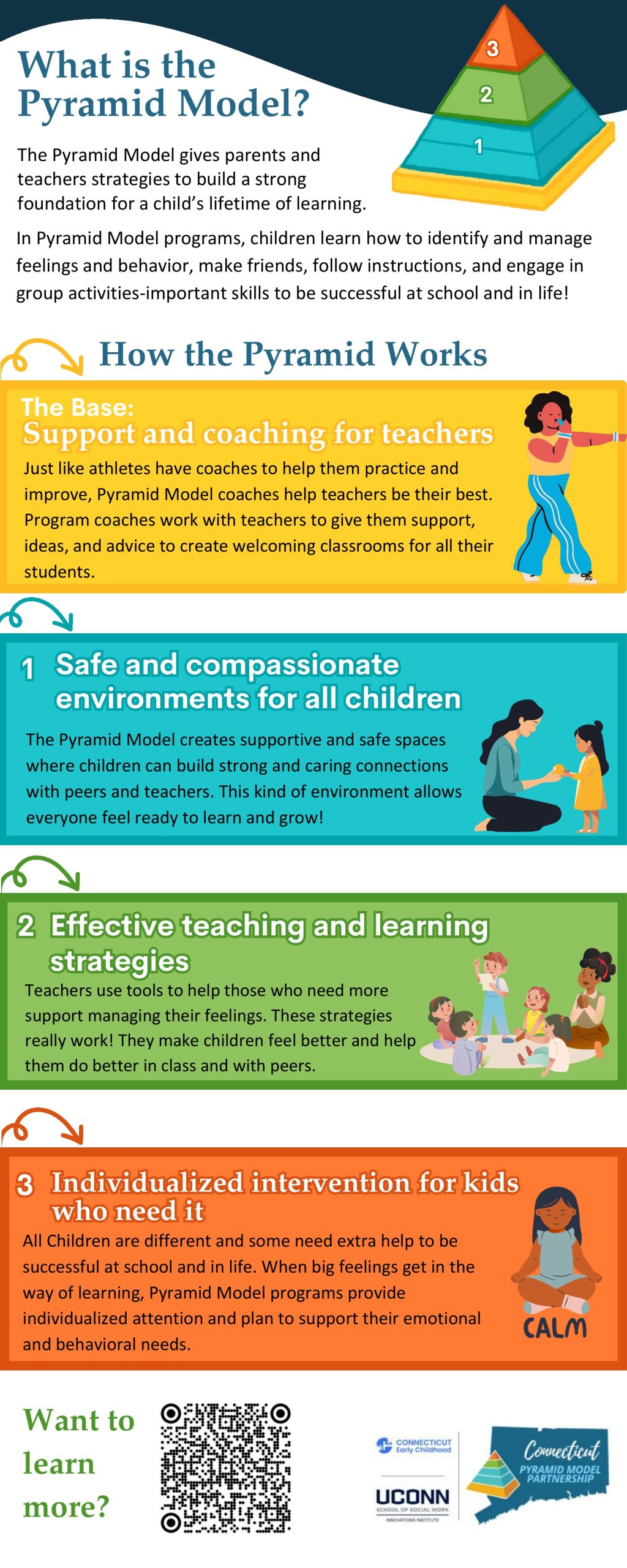
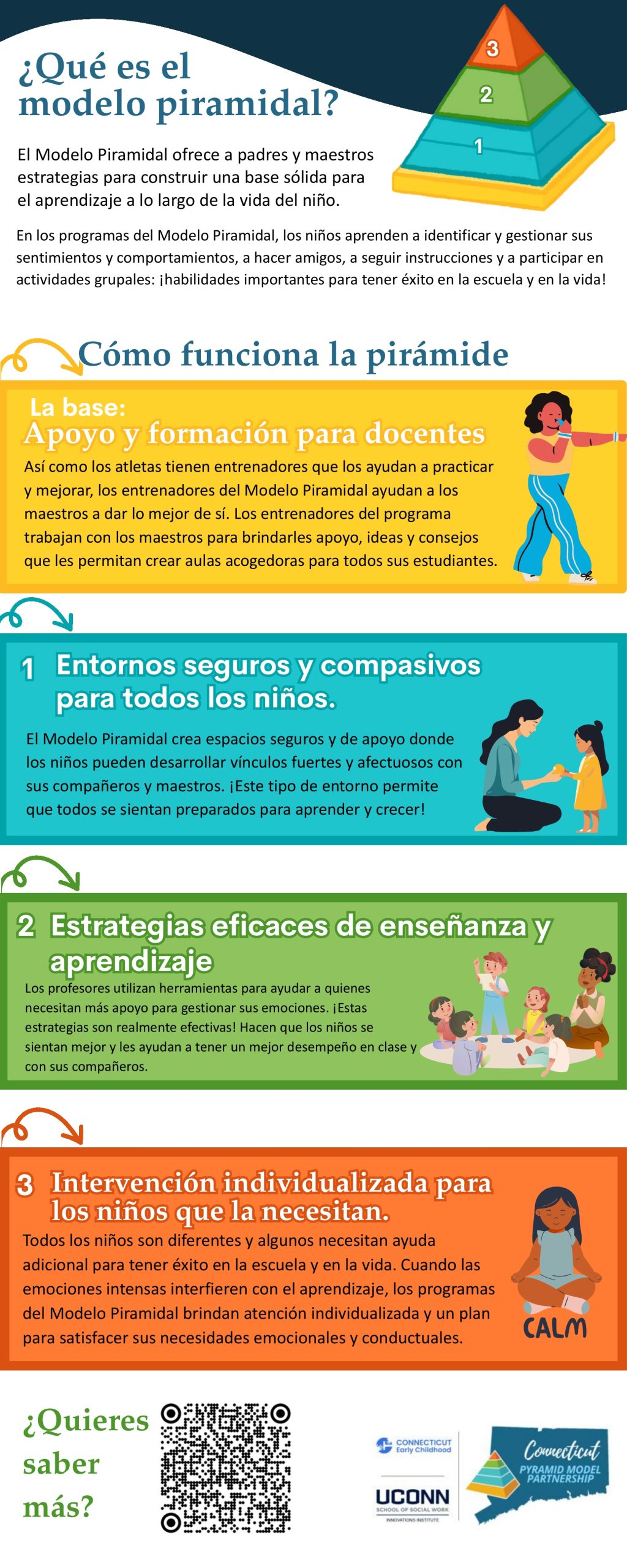
The Pyramid Model – The CT Pyramid Model is a research-based framework designed to help young children grow strong social, emotional, and behavioral skills. It’s used by early childhood educators, special education staff, and families to create supportive environments where children feel safe, valued, and ready to learn.
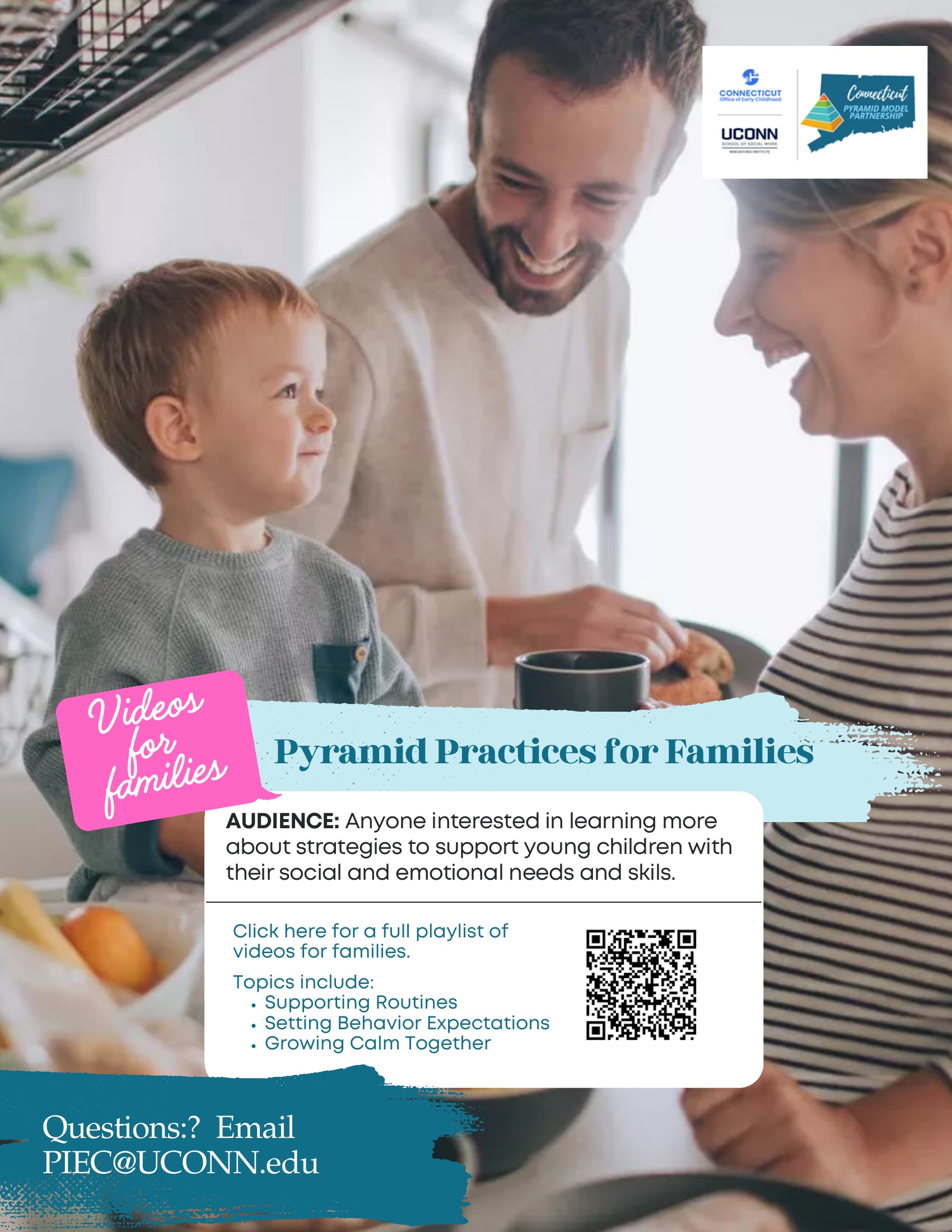
Family Routine Guide – The Family Routines Guide offers practical strategies to prevent and respond to challenging behavior during everyday family activities like mealtime, bedtime, and transitions.
Raising Emotionally Intelligent Children is a great article with practical ideas on how to encourage your child’s social-emotional development.
Calm-Down Skills – Tucker the Turtle is a child-friendly story that helps young children learn how to calm down when they have strong feelings. Families can use this simple strategy at home to support emotional regulation.
Vision
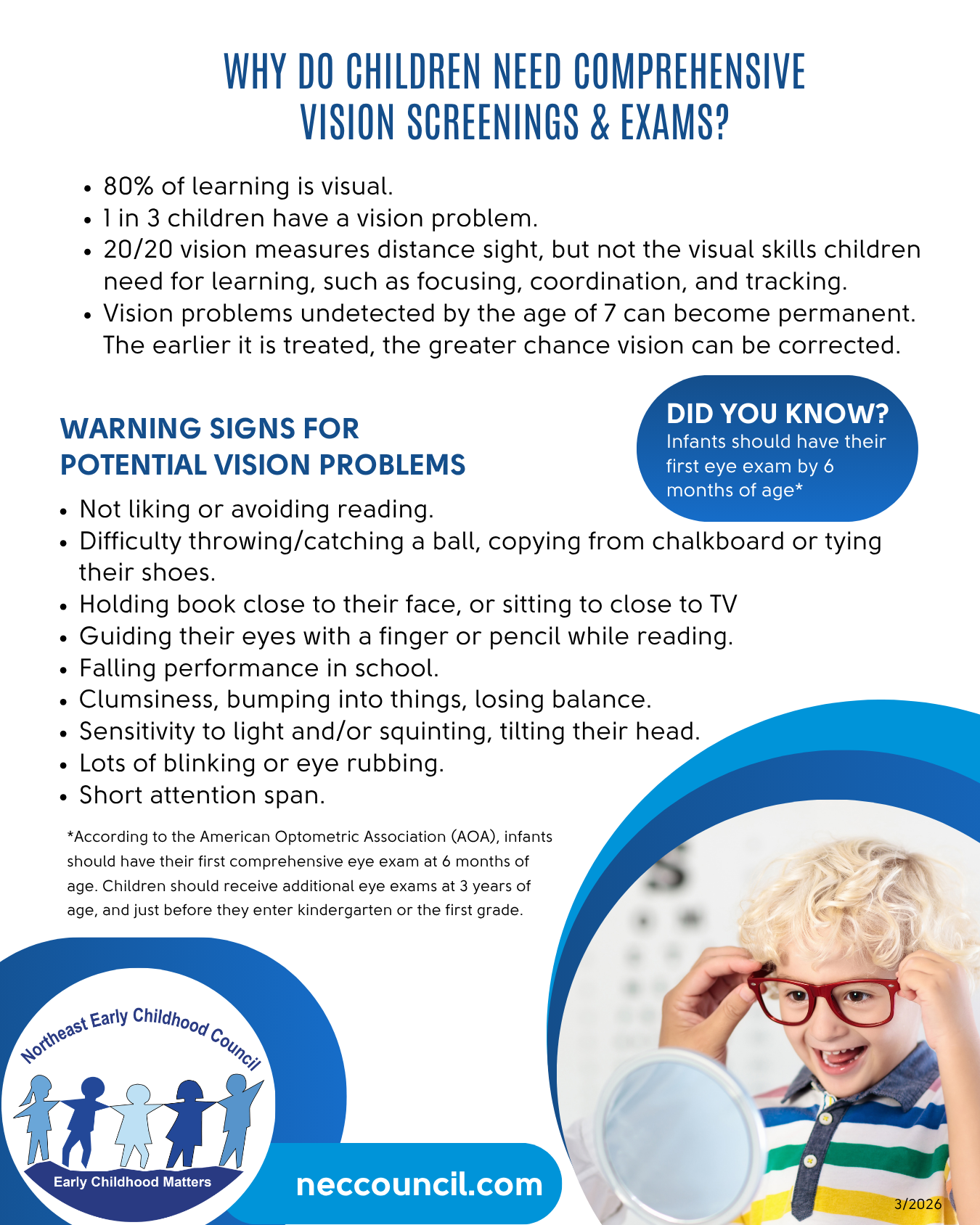
Find an eye doctor by searching on The Vision Council Foundation
Lions KidSight offers free exams in area public schools.
One of NECC’s earlier initiatives took place in the fall of 2015, when we partnered with Lions Clubs International, Killingly Public Schools, and Sterling Public Schools to screen over 1,400 children for vision concerns. Using advanced photo screening technology through the CT Lions KidSight Program, volunteers identified risk factors that may not be detected through traditional methods.
This collaboration helped identify 92 additional students with potential vision problems, who would not have been identified as having vision problems using traditional methods. Early detection is critical, as vision plays a key role in learning and school success.
Safety
Sleep Safety: ALWAYS put your infant on their back to sleep at bedtime and naptime. Remove stuffed animals, pillows or other soft, fluffy and loose bedding from the baby’s sleep area. This includes crib bumpers – they can be a suffocation hazard.
CT Poison Control Center – 800-222-1222
Anchor It educates parents and caregivers about the importance of anchoring furniture to prevent tragic tip-over incidents. Check out their website for how to properly anchor furniture.
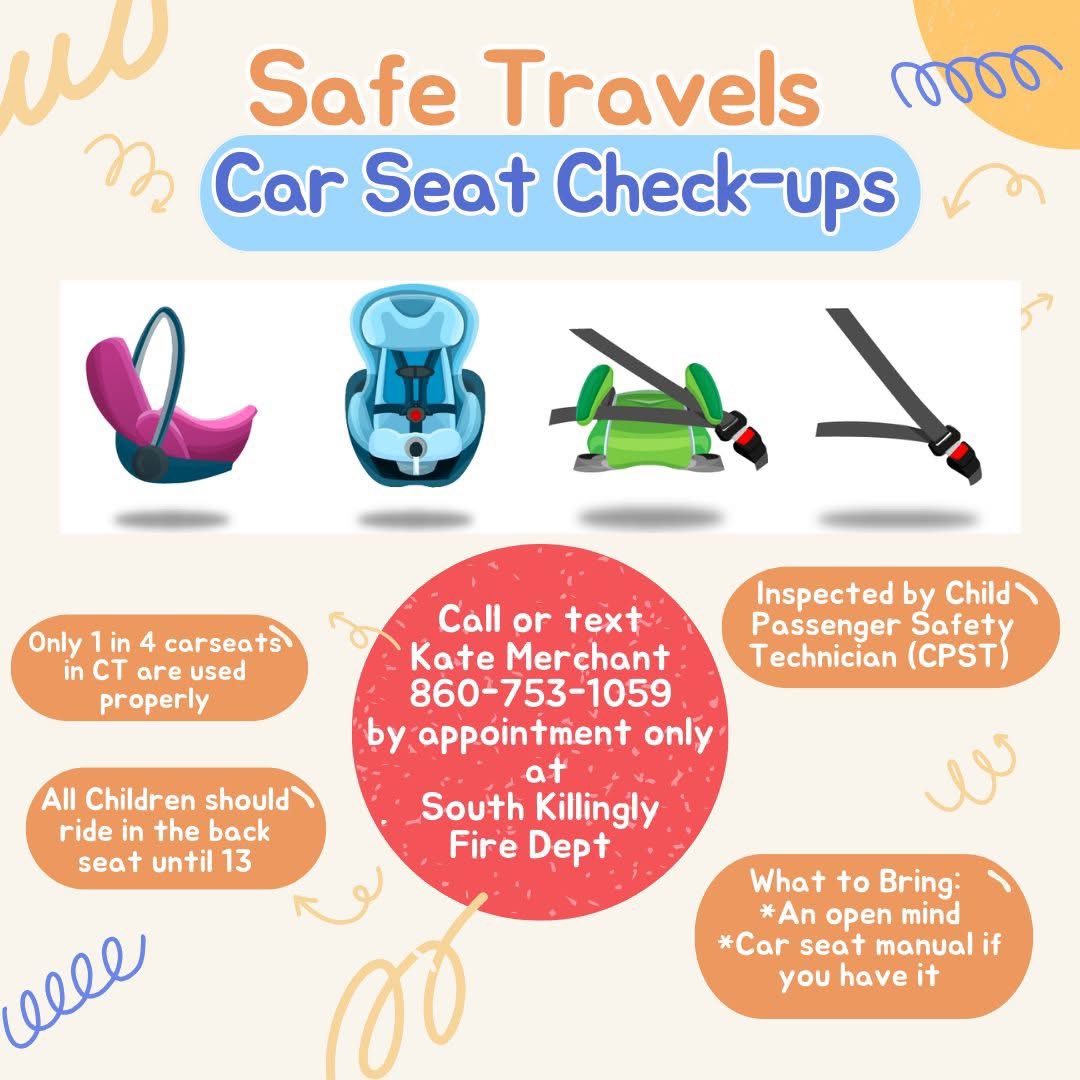
Carseat Safety – Reach out to our local Carseat Technician, Kate Merchant (860-753-1059) to have your carseat checked at South Killingly Fire Dept.
US Consumer Product Safety Commission – Provides safety information and education for families, along with up-to-date safety alerts and product recalls on a wide range of items, including toys, cribs, furniture, appliances, and more.
Parenting Tips
Peace At Home Parenting is an evidence-based parenting wellness benefit that supports parents at every stage of parenthood, reducing burnout for working parents, keeping them healthy and engaged. They offer everything from free virtual workshops, 1-1 consulting to quick tips to cover every stage of parenting.
For Ages 5-10, don’t forget to check out our Early School Age page!